Buyer’s Guide: Understanding Urinary Catheters
Urinary catheters are medical devices prescribed to help drain urine for conditions like incontinence, retention, or during recovery from surgery. They come in a variety of sizes, materials, and types—including external, intermittent, and indwelling options—to suit different patient needs and clinical situations. Understanding these differences helps both patients and caregivers choose the right catheter and related supplies for comfort, effectiveness, and proper bladder management. Allegro Medical offers a broad selection of these catheter types to meet diverse healthcare needs.

What is a Catheter?
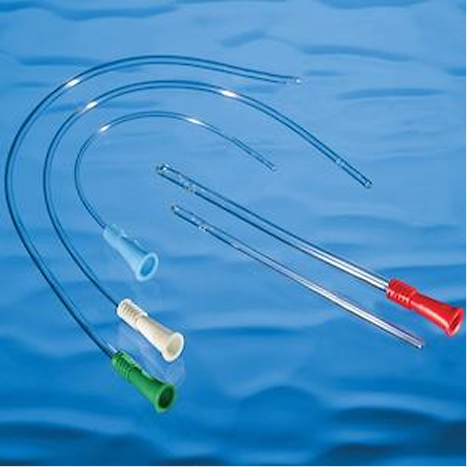
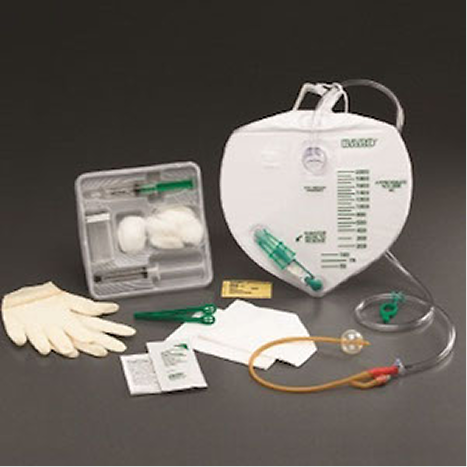
A common medical device that has been safely used for centuries, urinary catheters are soft tubes made from silicone or latex that help the bladder drain urine. One end of the hollow tubing typically sits in the bladder, while the other end is connected to a drainage bag. Catheters are typically employed when the bladder and/or urethra (also known as the urinary tract) are blocked or malfunctioning either permanently or temporarily, due to injury or disease. Depending on your individual medical condition, different types of catheters may be prescribed, including Foley catheters, or non-invasive
How does a Catheter Work?
Urinary catheters drain urine from the bladder through a tube to a heavy duty collection bag where it is temporarily held until emptied. Depending on the reason for catheterization, either an external or indwelling catheter will be prescribed by your healthcare professional. External catheters, most commonly used by men, are worn on the outside of the body; while indwelling catheters like Foley or intermittent catheters require an insertion tube that is fed through the urethra into the bladder. In both instances, urine is drawn out of the bladder by gravity, or in some cases suction, and is collected in an attached leg bag, belly bag, or bedside drainage bag. Intermittent catheters, however, can also drain directly into a toilet when possible.
Certain medical conditions may require a suprapubic catheter. This type of catheter enters the bladder through a small incision in the lower abdominal wall to drain urine.
What is a Catheter Used For?
Urinary catheters are used to void the bladder of urine when a patient is unable to do so independently. Depending on the patient's underlying medical condition, the type of catheter prescribed will differ.
Intermittent catheterization is a preferred treatment for patients with acute or chronic bladder dysfunction as a result of injury, medical condition or surgery. Common conditions associated with intermittent catheter use include neurogenic bladder, urethral stricture, urinary incontinence and vesicoureteral reflux.
Foley catheterization is used for both short term and long term care. Common short term uses include acute urinary retention, acute bladder outlet obstruction, accurate monitoring of urine output in critically ill or surgical patients, following or during prolonged surgical procedures. Common long term uses include chronic urethral obstruction where intermittent catheterization has stopped working or is not possible, to improve comfort for patients with irreversible or chronic medical conditions, and for incontinence care when a caregiver cannot be present.
External catheters are often a welcomed alternative to the invasive intermittent catheter and most commonly used when a patient is able to perform his or her own incontinence care. Indications for external catheter use include incontinence, overactive bladders, dementia, injuries limiting mobility, or in situations where an internal catheter is ill-advised like chronic urinary tract infection or those with bladder stones.
For more detailed information, please see the category page for each specific catheter type.

Urinary Catheter Types
Intermittent Catheters
Also known as straight catheters or in-and-out catheters, are soft, flexible tubes inserted through the urethra. Features such as fire-polished eyelets, various tip styles, and hydrophilic packaging provide many options
Foley Catheters
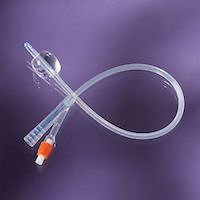
Also known as a balloon catheter, a Foley is an indwelling catheter retained in the bladder by a balloon inflated with sterile liquid. Foleys are most often inserted by a qualified healthcare professional in clinical settings.
External Catheters
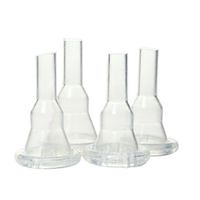
A male external catheter, also known as a condom catheter or a Texas catheter, is an external urinary collection device that fits over the penis like a condom. Female external catheter solutions are also available.

Closed-System Catheters
Closed-system catheters, a type of no-touch intermittent catheter, is a sterile, pre-lubricated catheter enclosed in its own urine collection bag that reduces the risk of bacterial infections.
Understanding French Sizes
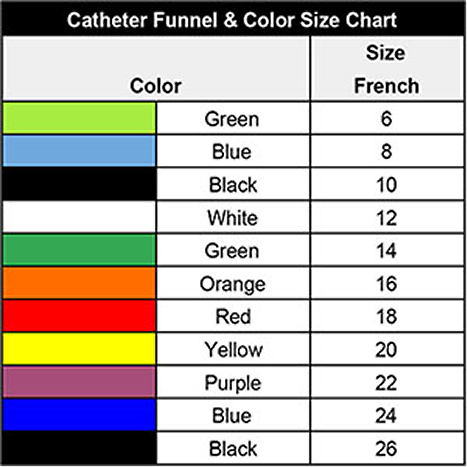
Most urinary catheter manufacturers use the French gauge system to denote the width of the tube. Typically a Foley or intermittent catheter package will be marked with the letters 'Fr' preceded by a number between 6 and 26. These numbers refer to the diameter of the catheter tube - the smaller the number, the narrower the tube. To convert a French scale size to millimeters, simply divide the number preceding the 'Fr' by three. For example, if the French catheter size is 14 Fr., the actual diameter of the catheter is 4.67mm. To easily identify a catheter size after removal from the packaging, a universal color code on the catheter connector is used by most brands. Most common sizes for men, women, and children are as follows:
-
Male Sizing Standard: 16 inches in length and range in width from 14 Fr. to 18 Fr. The most common male intermittent catheter and indwelling catheter French size is 14 Fr.
-
Female Sizing Standard: 5 to 6 inches in length and range in width from 10 Fr. to 14 Fr. The most common male intermittent catheter and indwelling catheter French size is 12 Fr.
-
Pediatric Sizing Standard: 10 inches in length to accommodate both boys and girls; range in width from 5 Fr. to 12 Fr.
Please note: Each individual's anatomy and medical conditions are different. Appropriate catheter sizing will be determined by your healthcare professional.
Relevant Terminology
Catheter
A tubular, flexible instrument, passed through body channels for withdrawal of fluids from (or introduction of fluids into) a body cavity.
Urinary Catheterization
The insertion of a blunt-ended, rubber or plastic tube into a patient's bladder through the urethra used as a conduit to drain urine from the bladder into an attached bag or container.
Indwelling Catheter
A hollow tube left implanted in a body canal or organ, especially the bladder, to promote drainage.
Suprapubic Catheter
Urinary drainage device inserted into the bladder through the lower abdominal wall above the symphysis pubis. Indications include urethral trauma, vaginal surgery, or long-term catheterization.
Clean Catheterization
A common way for people with neurogenic bladders that do not empty normally to void their bladders on a routine schedule; clean, rather than sterile, technique is used.
*Sourced from https://medical-dictionary.thefreedictionary.com/
Catheter Sizes
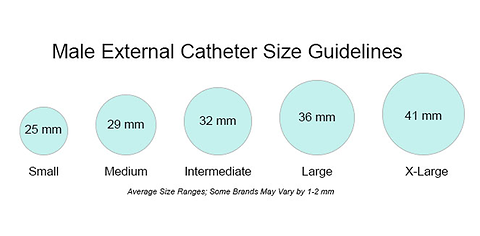
Male External Catheter Size Chart
Male external catheter sizes are typically measured in millimeters. For proper fit, use a measuring tape to find the circumference of the penis just behind the head. Divide the length in centimeters by 3.14 to find your size in millimeters and compare to your preferred brand's sizing guidelines or chart.
Tip: If between sizes, use the smaller size available. An external catheter will stretch to provide a good fit but a loose external or condom catheter will not properly adhere.
Please note: While many men will find a standard size that will fit properly, not all manufacturer's use the same guidelines. Check your preferred manufacturer's sizing recommendations before purchasing.
Does a catheter hurt?
Can a catheter cause a UTI?
How do I flush my catheter?